Category: Research

Workshops, expeditions, rehearsals, training, rading, process

  • I’m Not Shakespeare

    I’ve been doing a lot of thinking about how to “name and frame” my work as an artist and educator. A lot of what happens in theatres and classrooms requires all of our imagination and effort but it disappears once the moment is past. It lingers in some hearts and minds but the very nature of these spaces is that it is not repeated.

    This poses a real challenge to building a sustainable life and career making this kind of ephemeral work. As I get older, it feels like being good not enough. I want to be good at what I do, and then on top of that build a caring community around the arts and creativity.

    I’m not Shakespeare, but neither was he.

    This is a quote from a design book that has stuck with me for years. It’s now the home for all of my Shakespeare projects which includes Shakespeare Clubs (year round theatre groups), Shakespeare Lives (shorter workshops with students of all ages), Copiloting Shakespeare (a corporate training using AI to explore ideas and performance), the kids canon (a collection of original adaptations reimagined for audiences of all ages), and Shakespeare in Park Grabiszyński (a culminating event binging families and schools from across the city for a performance event).

    Look Out!

    And there’s more. I’m also quietly building a set of live sessions I can bring into high schools — talks, workshops, hands-on experiments — on topics I ‘m passionate about: creativity, AI, Shakespeare, filmmaking, what it means to make something. I’m calling the program Look Out! and it’s going live this September. Some sessions are conversations. Some get students on their feet. One of them starts with a two-minute YouTube video made from dead moths and ends somewhere near Plato. All of them are in English, all of them are adaptable. Previously I brought this work to Lubin, Milicz, Wroclaw, Dlugoleka, and Kudowa. I hope to expand out and meet more students.

    For info to to imnotshakespeare.com
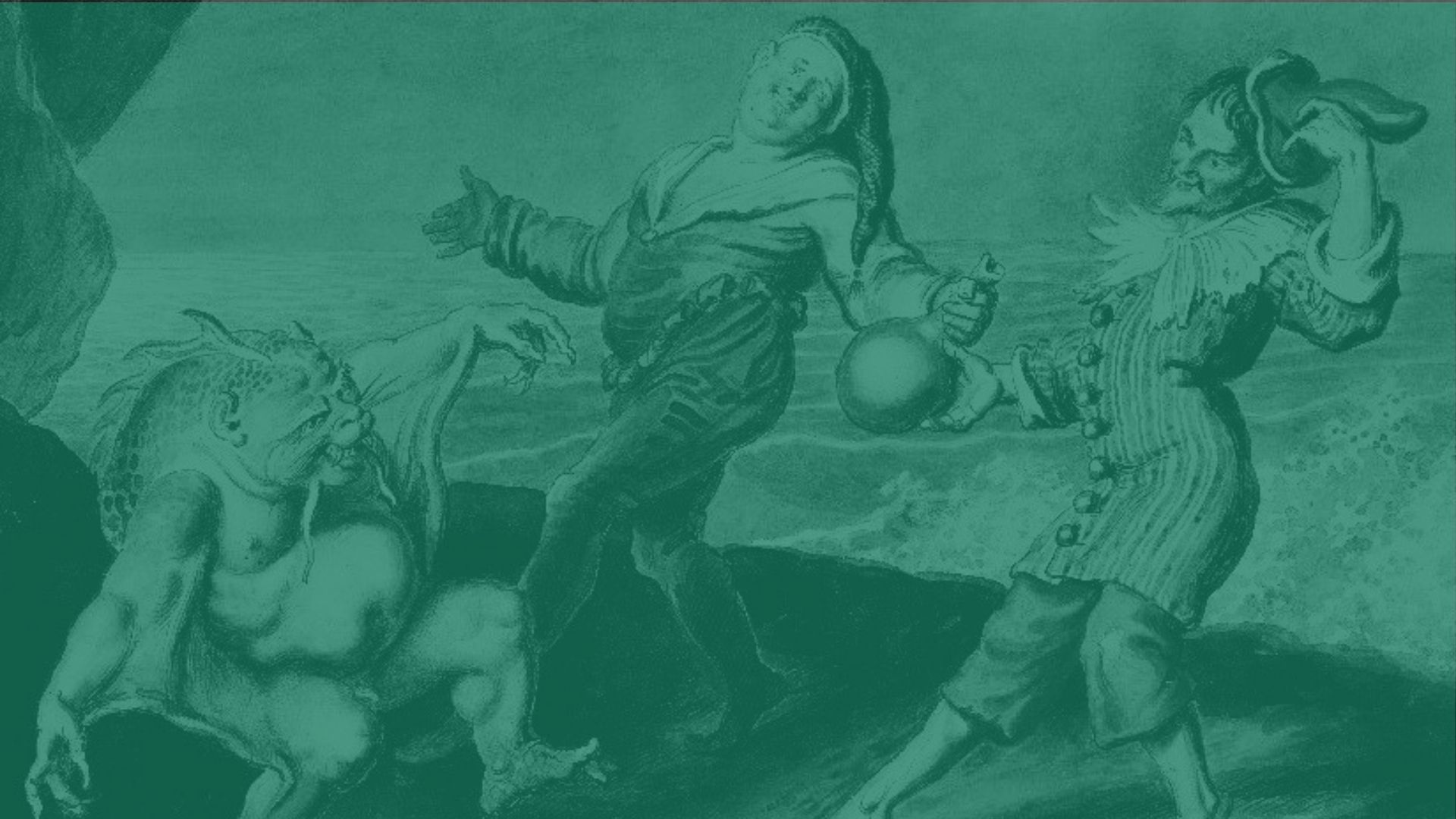
    “How now, mooncalf?” -The Tempest

  • A Crown Show

    Shakespeare Club presents and All Ages event

    A Crown Show

    A bored queen. A princess who has it all. A mysterious library cat. And a bunch of peasants. Who will win this game show style contest for the crown?

    A Crown Show is the latest addition to our kids cannon. Veeerrrry loosely after King Lear and Richard III. The premiere will take place 15 June 15:15 at Wroclaw International School.

    If you are interested in bringing a Shakespeare Club to your school for 2026/2027 please connect with me at:

    imnotshakespeare.com

  • Ha.

    „Congratulations, world.”
    -Anna Kelly, 03/12/25

  • Underneath the Lintel

    Some reasons I’m walking around with “Underneath the Lintel” in my pocket.

    Deep in the comments of Goodreads, someone once said that Underneath the Lintel was the best one person show ever written.

    Page one of the published text brought a smile to my face. The first production of this play happened at the Actors’ Gang, my old theater. It was directed by Brent Hinckley, who I got to know over a few games of darts in a shed at Oregon Shakespeare festival. And the Librarian was played by Brian Finney, who was one of the kindest and most supportive old school actors at the theater.

    Also, I was a librarian, in Poland. I ran the Story Center project in Wroclaw for international families. I collected book donations in the US, shipped them overseas, and opened a space on the weekends inviting the public to borrow amazing kids books, live art theatre books, and Shakespeare texts. I would also perform one person shows, have a read aloud playlist, and organize creative workshops. So… yeah. I like libraries and have thought about collections and cataloging for many years.

    The librarian in the play goes through a kind of process that I used to call following the runnels. When I graduated college, I had to be intentional with learning. When I’m in a performance or working on something, I love to find out more about the play, the playwright, the original production, the context of the theater, the artistic director, the background of the creative teams. Whatever it is, I need something to lead me into the wider world around the plays I make. This is, in essence, what this play is all about. This kind of upstream thinking – going back to truth itself.

    I was completely shattered by a whole range of John Green‘s podcast-now-book “The anthroprocene reviewed.” I love his take on weirdness in an essay about Liverpool and a Polish goalkeeper. In his Notes app review, I feel like he has mapped the digital terrain I’m always walking. With my family all asleep, his review of Auld Lang Sine brought me to tears while I was cleaning my kitchen.

    This tangent of John Green is to say some of those ideas that shattered me and cracked me open about this vast and unusual world are captured in “Underneath the Lintel.” We are here and we need to make something of it. We need to make meaning.

    I teach this to middle school and high school children, the arts help us make meaning. I have this need, right here right now, to make meaning of the big things happening around me. I know there is a movie script in it somewhere. But I don’t have an ending. “Underneath the Lintel” is giving me something to dance with while I stumble, shuffle, and trip my way through life.

  • The real benchmark

    In the previous post I referred to a fantastic conversation between Satya Nadella and Dwarkesh Patel (Microsoft’s AGI plan & quantum breakthrough, Feb 19, 2025).

    I was moving upstream to find the original source for a quote on AI benchmarks:

    …that’s just nonsensical benchmark hacking to me.

    For my MEd research I was looking at the relationships between AI, divergent thinking, and creativity. So I was reading a lot of claims by AI companies about the power of LLM models. Scoring new and unbelievable heights on standardized tests.

    But it feels foolish, doesn’t it? I mean, there is an answer key somewhere and the worst kind of education is where everyone teaches for the test. Don’t we loose so much in the process of learning if all we do is focus on answering the test? So I’m with him on that one, AI benchmarks are kind of nonsense.

    The whole conversation proved to be fascinating. It led me to many other insights and ideas. He is an interesting guy and perhaps I’ve been wrong about Microsoft (since 1994).

    He went on to say:

    Before I get to what Microsoft’s revenue will look like, there’s only one governor in all of this. This is where we get a little bit ahead of ourselves with all this AGI hype. Remember the developed world, which is what? 2% growth and if you adjust for inflation it’s zero?

    So in 2025, as we sit here, I’m not an economist, at least I look at it and say we have a real growth challenge. So, the first thing that we all have to do is, when we say this is like the Industrial Revolution, let’s have that Industrial Revolution type of growth.

    That means to me, 10%, 7%, developed world, inflation-adjusted, growing at 5%. That’s the real marker. It can’t just be supply-side.

    In fact that’s the thing, a lot of people are writing about it, and I’m glad they are, which is the big winners here are not going to be tech companies. The winners are going to be the broader industry that uses this commodity that, by the way, is abundant. Suddenly productivity goes up and the economy is growing at a faster rate. When that happens, we’ll be fine as an industry.

    But that’s to me the moment. Us self-claiming some AGI milestone, that’s just nonsensical benchmark hacking to me. The real benchmark is: the world growing at 10%. (0:15:18 – World economy growing by 10%).

    Wow. Um… let’s have it.

  • AI and the Odyssey

    I visited a classroom for a theatre workshop last week and the teacher had prepared a short script for the students using AI. It was a fragment of the Odyssey story and they were getting ready for a presentation at a school assembly. I brought in to play some games and help them break out of their shells.

    What I appreciated most about this teacher’s approach was that they used AI as a bridge to get the students to an experience. Kids had read the story, they had talked about the story, but writing a play version would be a whole different kind of lesson.

    Instead of learning about playwriting, AI was used to quickly generate a script, the teacher tweaked it a bit, shaped the story, and they had a working blueprint for their performance.

    As an artist and educator, I’m using AI in two main ways: to encourage me to work with various canvases (tools), and to move my students closer to experiences (making and doing).

    I was inspired by this conversation between Satya Nadella and Dwarkesh Patel where the Mircosoft CEO asked “Can the LLM help me do my knowledge work using all of these tools or canvases more effectively?” (0:55:46 – Getting AGI right). And from that concept, I started thinking that it was really experiences I want my students to move towards. Not populating documents but standing in front of other people doing something that no AI can do – being face to face, looking in each other’s eyes, activating our own imaginations.

    Thank you for the invite. Bravo students! Good luck with the show.

  • the Foundation 2.0

    You might have noticed my website is a bit out of date. I dropped it for… oh, something like 7 years. Lots went on. If I were to sum it up I would say, Family.

    My intention with this site has always been to discuss things I have been inspired by and thinking about and making. These past years I have made steady efforts on reforming Aardvark Arts to be a healthy foundation for my family life in Poland. It was initially a platform to support and network with other artists. Now I am using my artistic practice and teaching efforts to build a caring community around arts and culture.

    The official label for my org in Polish is “fundacja z działalnością gospodarczą” (foundation with economic activity). This means that I can do something (for example: performance, workshop, and summer camp) and charge money for it as long as the revenue goes back into the foundation towards it’s public benifit mission.

    Some people have wondered why I chose this type of foundation while other people have asked me why I don’t just set up a business. The answer is that this hybrid model matches my style and way of thinking. When I first arrived in Poland I was thinking deeply about blended revenue streams for theatre companies in Los Angeles, evaluating B-Corps vs. fiscal sponsorships, and marveling at socially oriented companies like Toms and Warby Parker.

    Still, much of what I have done with my own org here in Poland has been by passion and instinct. Most people that I talked to didn’t understand the “why” and therefore couldn’t help me much with “how” to set things up and run it. Even I have been somewhat limited by a hustle mindset where each project meant I had to somehow balance salaries (expenses) and revenue. I have mostly (nearly entirely) avoided grants because it all seemed too complicated and at odds with my American style of generating revenue.

    But it is time for an upgrade to this thinking and I am ready for more complexity in order to properly frame and support the model that I set up all those years ago.

    I have always been an artist and producer. Only now have I been able to name what it is I was doing from the beginning. I am working from a European social enterprise model with a Polish foundation structure. Business principles (projects) fund the mission (art, education, community) without always relying on grants. That is the next level that I am working towards. Grants. They will only be available if I can clearly name and frame the efforts which drive revenue and those which are a public benifit.

    Creative Summer is a programe.
    The 9th season (in 2026) is a project with economic activity. That project will help fund the public benifit projects Apprentice youth leadership and the community scholarship project. My Media Lab teaching activity is a paid workshop and curriculum that I deliver in schools. That project will help cover the costs of the free First Take Film Festival pilot program.

    Economic activity isn’t the opposite of the mission it is the engine. It has been 12 years of survival mode thinking but now I’m stepping into sustainability thinking. This has opened up a refreshing view on what to take on next and how to keep evolving as an artist and as a producer.

    Stay tuned for more to come.

  • ’25 September in Rearview

    Art Making: I started work on a student film festival that will give space for video projects made by kids, made with kids, and made for all ages.

    Teaching: The 2025-2026 school year began. New students, new units, new workshops. Back again: Thtr Lab, Media Lab, Shakespeare Club, and AV Club. Art Matters NOW!

    Producing: Prepped financial reports and worked towards a full legal governance and compliance audit. I’ve been calling this effort Aardvark 2.0.